
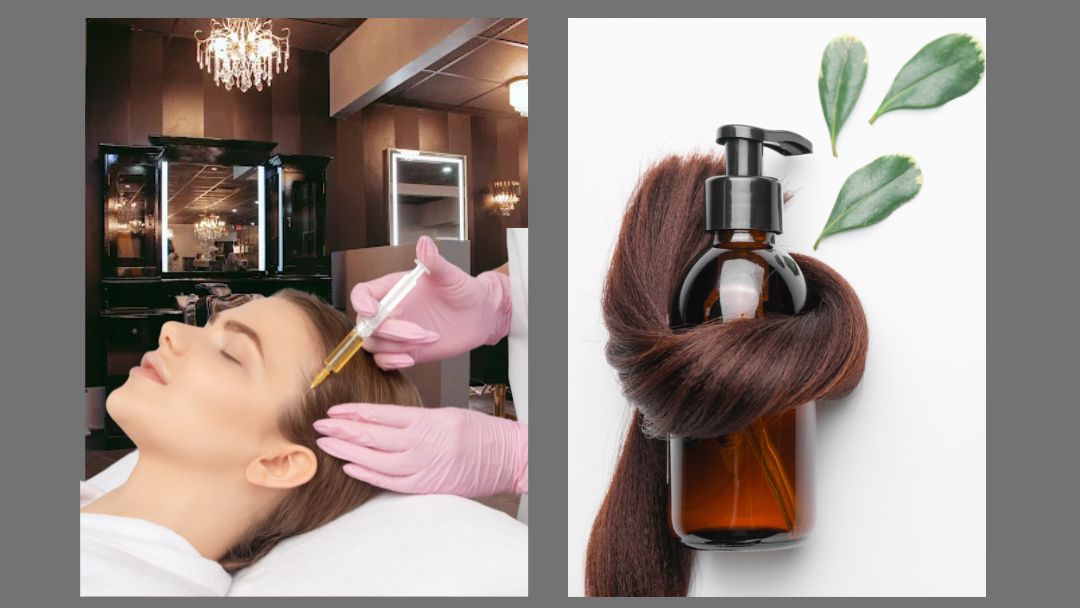
When your hair feels like straw instead of silk, deep hydration treatments and strategic moisture routines can repair hair damage faster than you’d think possible.
Look, we see it every day in our salon. Clients walking in with hair that’s been through the wringer. Heat damage, chemical processing, environmental stress — your hair takes a beating. But here’s what I’ve learned after years behind the chair: repair hair damage isn’t just possible, it’s totally doable with the right hydration game plan.
Damaged hair can be repaired and rejuvenated through intentional, science-backed hydration strategies.
Whether your hair is suffering from color processing, heat styling, or environmental stress, solutions like hydrating oils, deep conditioning masks, and proper routines can restore softness, strength, and shine.
With the right guidance and a tailored approach, every woman can say goodbye to dry, brittle strands and hello to enviable, healthy hair.
Let’s walk you through exactly how I help my clients transform their damaged locks into healthy, bouncy hair that actually behaves. No fluff, no impossible routines: just real strategies that work.
 Key Takeaways
- > Moisture is medicine — Deep conditioning treatments and natural oils are your hair’s best friends for repairing damage
- > Consistency beats intensity — Regular hydration routines trump occasional expensive treatments
- > Prevention is easier than repair — Heat protection and gentle handling save you months of recovery time
- > Your lifestyle matters — What you eat and drink directly impacts your hair’s ability to hold moisture
- > Professional guidance accelerates results — Sometimes you need an expert to assess damage and create a targeted plan
The Real Deal on Hair Damage and Why Hydration Works
When your hair feels like straw instead of silk, chances are you’re not just dealing with “frizz.” You’re looking at a hydration crisis. I see it in my chair all the time: color-treated blondes that snap like twigs, heat-styled hair that’s lost its shine, or curls that tangle the second they touch water.
Here’s the truth: damaged hair is basically thirsty hair that’s forgotten how to hold onto moisture.
When the cuticle — that protective outer layer — gets roughed up from heat, chemicals, or even just sun and wind, it lifts like shingles in a storm. Moisture escapes, the hair shaft weakens, and you’re left fighting breakage, dullness, and stubborn frizz.
The good news? Hair is surprisingly resilient when you treat the right problem; repairing its ability to hold moisture, not just coating it with products.
Signs Your Hair Needs Hydration Help
Before we talk repair, let’s make sure you know what you’re looking for. If you check more than two of these boxes, your hair is screaming for moisture:
- Feels rough even when wet
- Breaks when you gently stretch a strand
- Looks dull under any lighting
- Tangles right after washing
- Refuses to hold a style
Pro test: The stretch test. Take a wet strand and pull gently. Healthy hair stretches about 50% of its length before bouncing back. Damaged hair either snaps right away or stretches like gum without recovery.
What’s Happening Inside Your Hair
Think of your hair like a bucket. When it’s healthy, the sides are sealed and can hold water. When it’s damaged, tiny cracks let the “water” leak out. Here’s how that breakdown happens:
| Stage | What’s Going On | Result |
| Cuticle lift | Outer layer is roughed up | Moisture escapes faster |
| Shaft weakening | Gaps form in the hair’s structure | Hair feels rough, frays easily |
| Barrier loss | Hair can’t retain treatments | Breakage and frizz increase |
Most people try to fix Stage 3 hair with Stage 1 solutions; like shine sprays or heavy creams, and then wonder “why nothing works?”
.jpg "Lemon Water by Aflo Images from アフロ(Aflo)")
Healthy hair naturally contains 10–13% moisture. Drop below 8% and the texture shifts: you get frizz, breakage, and that “haystack” feel. Hydration treatments work by:
- Replenishing lost moisture
- Rebuilding the moisture barrier so it can hold onto that hydration longer
- Strengthening the inner structure to prevent further loss
It’s not about drowning your hair in product — it’s about restoring its ability to hold what you give it.
Matching Hydration to Repair Damage Hair by Type o
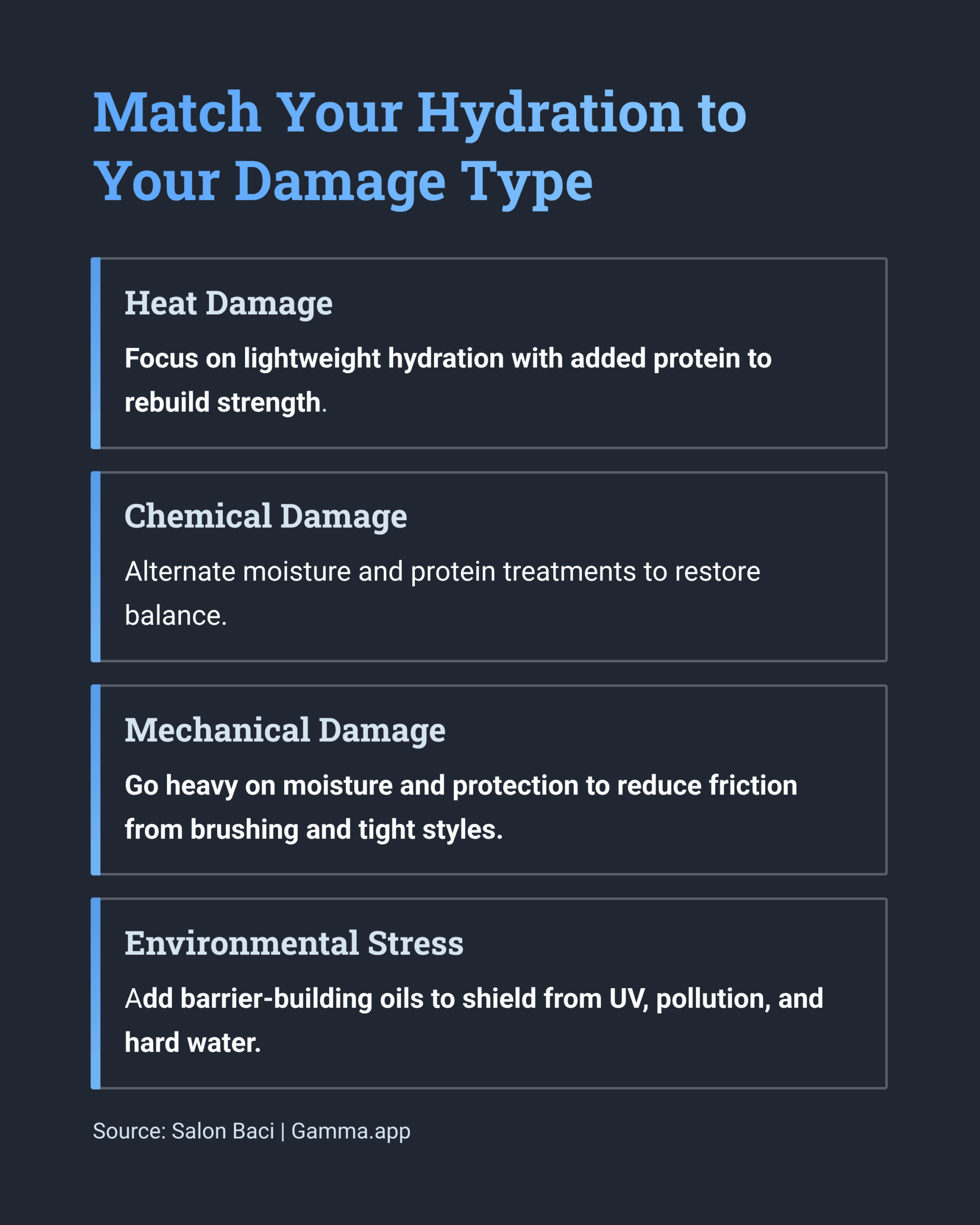
 Different damage types need different repair strategies:
- Heat damage: Focus on lightweight hydration with added protein to rebuild strength.
- Chemical damage: Alternate moisture and protein treatments to restore balance.
- Mechanical damage (brushing, tight styles): Go heavy on moisture and protection to reduce friction.
- Environmental stress: Add barrier-building oils to shield from UV, pollution, and hard water.
How Fast Can You See Results?
In my salon, most clients notice a real difference in 4 weeks with consistent care. Texture starts to normalize, frizz calms, and styling becomes easier. By 6–8 weeks, the change is usually dramatic — softer, stronger hair that actually behaves.
Pro Tips to Kickstart Hydration to Repair Damaged Hair
- Clarify first — treatments can’t work through product buildup.
- Apply to damp hair — soaking wet strands dilute the product.
- Use heat wisely — gentle heat opens cuticles so treatments penetrate.
- Alternate protein and moisture to prevent overload in either direction.
- Patch the “bucket” before filling — rebuild structure, then layer in hydration.
Bottom line?
Repairing damaged hair isn’t about finding a miracle product. It’s about creating a smart hydration plan that works with your hair’s biology.
Patch the leaks, feed it the right mix of moisture and protein, protect it from future damage, and you’ll see your hair transform faster than you think.
Understanding the Factors Causing Hair Damage
What Causes Split Ends?
Split ends happen when the protective cuticle layer completely wears away, leaving the inner cortex exposed and vulnerable.
We see this most often from three main culprits: mechanical damage from rough brushing (especially when wet), chemical processing that strips the hair’s natural proteins, and heat styling without proper protection.
Once the hair shaft starts to fray, it’s like a run in pantyhose! It only gets worse. The key is catching damage early and trimming before splits travel up the hair shaft, because no product can truly “repair” a split that’s already formed.
What Causes Frizzy Hair?
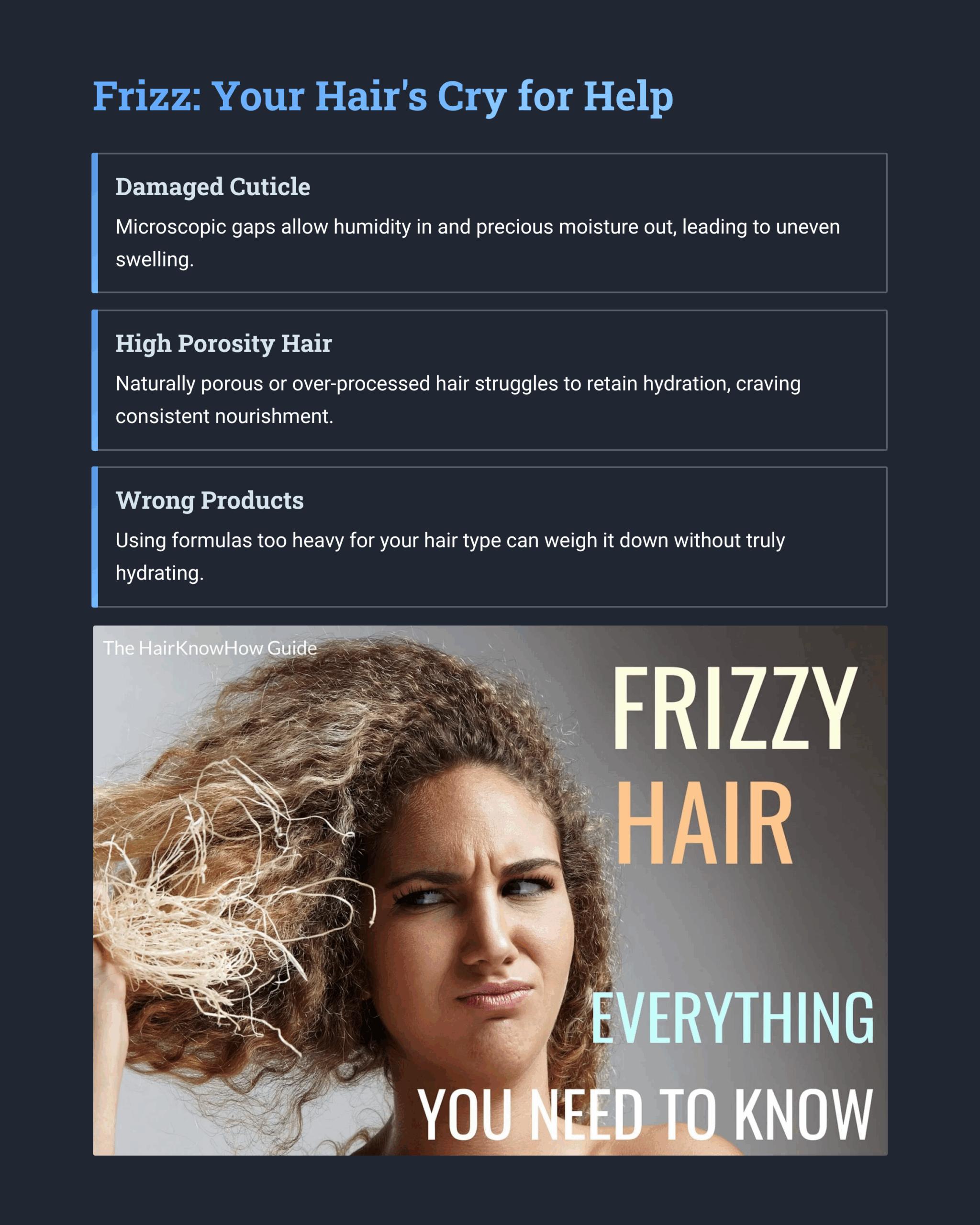
Frizz is basically your hair’s cry for help when it can’t hold onto moisture properly.
When the cuticle layer is damaged, it creates microscopic gaps that let humidity in but also let moisture escape. Your hair tries to grab moisture from the air, which causes the shaft to swell unevenly. That’s what creates that fuzzy, uncontrolled texture.
Our stylists also see frizz when clients have naturally porous hair that’s been over-processed, or when they’re using products that are too heavy for their hair type.
The solution isn’t just adding moisture; it’s rebuilding the hair’s ability to retain it evenly. Another key factor how to repaire. damaged hair.
Here’s where most people go wrong. Tthey pile on heavy products, thinking more is better. But damaged hair needs repair first, then moisture, then protection.
It’s like trying to fill a bucket with holes in it. You’ve got to patch the holes before adding water.
We’ve seen clients completely transform their hair in 6-8 weeks using targeted hydration strategies. The key is understanding that different types of damage need different approaches.
Heat damage responds differently from chemical damage, which responds differently from mechanical damage from brushing or styling.
Environmental factors play a huge role too. UV exposure, pollution, hard water, even air conditioning can strip moisture from your hair faster than you realize. We have clients who travel frequently, and their hair always needs extra TLC because of constant exposure to different climates and water systems.
The breakthrough moment usually happens around week 4 of consistent treatment. That’s when clients start texting me photos because they can’t believe how different their hair looks and feels. The texture starts to normalize, the frizz calms down, and suddenly, styling becomes easy again.
It is important to remember the UV environmental factors to hel repair damaged hair.
What really drives results is understanding your hair’s specific damage pattern. Some people have surface damage that responds quickly to treatments.
Others have structural damage that needs more intensive repair. That’s why I always do a thorough assessment before recommending any routine.
The moisture retention game changes everything. Once your hair can actually hold onto the treatments you’re giving it, you start seeing exponential improvements. It’s like compound interest for your hair — each treatment builds on the last one instead of just washing down the drain.
Deep Conditioning Treatments That Actually Work
I’m going to be straight with you. Most people are doing deep conditioning wrong. They’re either using the wrong products, leaving them on for the wrong amount of time, or not prepping their hair properly.
When our Salon Baci stylists work with damaged hair, we start with protein-moisture balance.
As an example, L’ANZA Healing Care – Hibiscus Vibrance Complex.[need Lanza products here] This is huge.
If your hair is over-moisturized (yes, that’s a thing), adding more moisture makes it worse. If it’s protein-overloaded, it’ll feel brittle and snap.
Our go-to deep conditioning routine for repair:
Start with clarifying to remove buildup. Damaged hair can’t absorb treatments through product residue.
Apply deep conditioner to damp hair, not soaking wet. The water dilutes the treatment.
Focus on mid-lengths to ends where damage is worst. Use heat if possible — I have clients sit under a dryer for 20 minutes or wrap their hair in a warm towel.
Here’s what we’ve learned about timing: 1
5-20 minutes with heat beats 2 hours without it. The heat opens up the cuticles so treatments can actually penetrate instead of just sitting on top.
For severely damaged hair, we recommend alternating between protein and moisture treatments. Week one: protein treatment. Week two: deep moisture. This prevents overloading in either direction.
L’Oréal Paris Editors , explain the science perfectly:
“A deep conditioner packs a mighty punch. As we noted above, this essential provides a deeper conditioning of your strands than a standard conditioner can provide. Usually, it’s much thicker than traditional conditioners, which works in your favor to refresh and revive your locks for a hydrated and nourished look and feel. It’s an ideal hair treatment for when your locks are looking a little dry and frail.” [1]
See what they’re saying? It’s not just about slapping conditioner on your hair and hoping for the best. You need ingredients that actually get inside and fix things. That’s why I’m picky about the products I recommend in order to help repiar damaged hair.
We recommend you avoid putting the treatment product on top of the head. You need to work it in from the ends up. Avoid over usage
My favorite professional-grade ingredients for deep treatments:
Hydrolyzed keratin (fills in damaged spots), ceramides (rebuild the moisture barrier), amino acids (strengthen the hair shaft), and natural oils with small molecules like argan and jojoba.
Best Oils for Damaged Hair
Okay, let’s talk about oils because this is where I see people make expensive mistakes. Not all oils are created equal, and using the wrong one can actually make damage worse.
The oils that actually penetrate hair:
At Salon Baci we have a strong, experience-based view of the value of the L’ANZA line of hair care products.
For example, for extremely damaged hair, the Emergency Treatment is ideal. It’s a 3-step service and our most powerful hair healing system. We also recommend the “Ultimate Treatment’, also a 3-step system based on the client’s hair type, condition & desired result.
Another great L’ANZA treatment for hair damage is the Intensive Hair Masque is a great place to start.
Hair masks offer incredible benefits and healing properties to repair damaged hair of all types. Weekly hair mask treatments can be an effective way to treat and replenish your heat-damaged hair, but you must find the right one.
Hair masks exist for many different purposes, and you don’t want to treat the wrong thing. Look for a hair mask with plenty of natural, healthy oils specifically designed to moisturize and strengthen your hair. L’ANZAs Intensive Hair Masque is a great place to start
Some of you may want to know what you might use at home on your own. Coconut oil is the superstar here — it’s one of the few oils that can actually get inside the hair shaft. Jojoba oil mimics your scalp’s natural sebum. Olive oil works great for overnight treatments.
Warm the oil in your hands first — this helps it absorb better. Apply to damp hair, not dry (water helps carry the oil deeper). Focus on the most damaged areas. Leave on for at least 30 minutes, overnight for severe damage.
If you find the need to remove oils to avoid any greasy buildup up you can try a “Sry Shampoo Wash” as needed
The biggest mistake I see? People who use oils such as those with Argan or Jojoba, or other treatment oils are using too much oil or not removing it properly. You want your hair to absorb the treatment, not look greasy for days.

And here’s a pro tip. If your hair is protein-sensitive, oils are your safest bet for deep moisture without overloading.
Replace with Lanza
| Oil Type | Best For | Application Method | Leave-In Time |
| Coconut Oil | Severe damage, penetration | Warm, apply to damp hair | 2-8 hours |
| Argan Oil | Frizz control, shine | Light application to ends | Can leave in |
| Jojoba Oil | All hair types, daily use | Mix with styling products | Daily use OK |
| Olive Oil | Overnight treatments | Warm, full saturation | 6+ hours |
Heat Protection and Styling Changes
Here’s where we need to have a real talk. If you’re trying to repair hair damage while continuing to fry it with hot tools every day, we’re fighting a losing battle.
I’m not saying you can’t use heat, we use it in my salon every day. But you need to be strategic about it.
Our heat styling rules for damaged hair:
Never style on wet hair (unless using a blow dryer with proper heat protectant). Use the lowest temperature that gets results. Invest in good tools.
Cheap flat irons with uneven heat distribution cause more damage.
Take heat breaks, even one day a week makes a difference.
What’s Your Secret Weapon Against Heat Damage?
Most people don’t realize this, our salon’s secret weapon isn’t a product, it’s technique.
Our stylists have expereince watching clients fry their hair with flat irons, Weve developed what we call the “sectioning and staging method” that cuts heat damage by about 70%.
First, we try to advise clients not to style hair that’s more than 80% dry. That remaining moisture creates a protective buffer that prevents the cuticle from getting completely scorched.
Second, we coach them to section their hair into quarters and work systematically, no random grabbing of chunks. This ensures even heat distribution so you’re not going over the same piece multiple times.
I asked our experienced salon manager, Zoey, to weigh-in on the heat protection topic to help repair damaged hair.

Salon Manager – Zoey
In our experience, here’s the real game-changer: temperature staging. Start at 300°F for the first pass to set the style, then bump up to your target temperature only if needed. Most damaged hair responds beautifully at 320°F or lower when you use this method. I’ve seen clients completely transform their styling routine and actually get better results with less damage.
The key is patience and precision—two things that separate professional results from home disasters.
The heat protectants that actually work contain silicones or proteins that form a barrier between your hair and the heat. Avoid “all-natural protectants.
Professional vs. At-Home: When to Call for Backup
Sometimes you need professional help, and there’s no shame in that. Here’s when I tell clients they need more than at-home treatments:
Your hair breaks when wet, has bald or thin spots, feels gummy when wet, or shows no improvement after 6 weeks of consistent treatment.
Professional treatments like L’ANZA Rapid Bond Reconstructor can rebuild bonds that home treatments can’t touch. But they’re not magic; you still need to maintain the results at home. Your stylist should review the product recommendation and cover any safety concerns.
Professional products penetrate the cuticle deeper than drugstore brands.
The Lifestyle Factor Nobody Talks About
Your hair is basically a reflection of your overall health, and I see this connection every day. Clients going through stress, dietary changes, or health issues always show it in their hair first.\
What actually impacts hair health?
Water intake (seriously, drink more water). Protein in your diet — your hair is mostly protein. Iron levels — low iron equals weak, thin hair. Sleep quality because your hair repairs itself at night.

Here is what a professional, Dr. Mona Gohara, Prevention Magazine (Health Magazine), June 2025. Has to say.
“Healthy hair starts from within. Drastic elimination diets and dramatic changes in weight are a very common cause of telogen effluvium, which is hair shedding that’s faster than growth. This can also happen if your diet is deficient in vitamin D, folate, iron, or vitamin B12.”[2]
We have clients who transformed their hair just by addressing nutritional deficiencies. It’s not always about the products you put on your hair. Where appropriate, our stylists may ask about any recent surgeries and diet to determine if a dietary deficiency may be present.
Frequently Asked Questions to Understand Hydration Strategies to Repair Damaged Hair
 Here are several FAQ’s we hear about. We provide the answers using a Tab system so you can pick and choose which questions are important to you. Just Click Your Questions Below.
- How long does it take to repair damaged hair?
- Can you really repair split ends?
- How often should I deep condition damaged hair?
- Can I over-moisturize my hair?
Honestly? It depends on the damage level, but I usually see significant improvement in 4-6 weeks with consistent treatment.
Severely damaged hair might need 3-4 months to fully recover.
No, once a split end forms, it needs to be cut off. But you can prevent new ones and strengthen the hair shaft to prevent more splitting.
It’s treatment damage control time!
Start with weekly treatments. Once your hair starts improving, you can scale back to every other week or monthly for maintenance.
Yes! Over-moisturized hair feels gummy and limp. If this happens, use a protein treatment to restore balance.
Making It Happen: Your Next Steps
Look, we’ve given you a lot of information here, but the key is starting somewhere. Pick one or two treatments that sound doable for your lifestyle and commit to them for at least a month.
We love helping clients figure out what’s going to work best for their specific situation. Every head of hair is different, and what works for your friend might not work for you.
If you’re in the Cincinnati area, come see us at Salon Baci. We can assess your damage level and create a targeted plan that actually fits your lifestyle. We are here to help you figure out your best hair.
Want to chat about which treatments would work best for your hair? Drop by the salon or schedule a review. We’d love to take a look and give you some personalized recommendations. Your hair transformation story is waiting to happen!
– Emily Salzano, owner
RECOMMENDED RESOURCES:
You will find valuable information, tips, and help in our Salon Baci Learning Center. To access more in-depth ideas on Hair Treatment, check out

Authors: Guido & Emily Salzano
Salon Baci Learning Center: It is important to provide information and insights for those considering various salon services. For all your personalized salon services and treatments for your specific beauty needs, we recommend a professional consultation. An experienced stylists can assess your needs and create a tailored treatment plan. For those in the greater Cincinnati area we invite you to schedule an appointment at Salon Baci to discuss your unique hair and beauty needs.

For those of you in the greatr Cincinnati area Salon Baci is located downtown in the famous Fountain Square District. Call us at 513 979-3203 or visti us at : 23 E. 6th St., Cincinnati, Ohio 45202
REFERENCES
[1] L’Oréal Paris Editors, L’Oréal Paris Beauty Magazine (Product Company Site), 2024
[2] Dr. Mona Gohara: Prevention Magazine (Health Magazine), June 2025.
- Header Hairstyle images; Treatment: by dimid_86 from Getty Images. Oil & hair: View more by pixelshot
- CanvaPro: Lemon Water: by Aflo Images from アフロ
- Dry Hair Damage Video: by mrs_veronik from Getty Image
Graphics: Created in Canva.com. napkin.app,, and Gamma.app
Article Content Development and AI: Refer to Terms & Conditions Page
Copyright 2025 | Salon Baci Cincinnati | All Rights Reserved